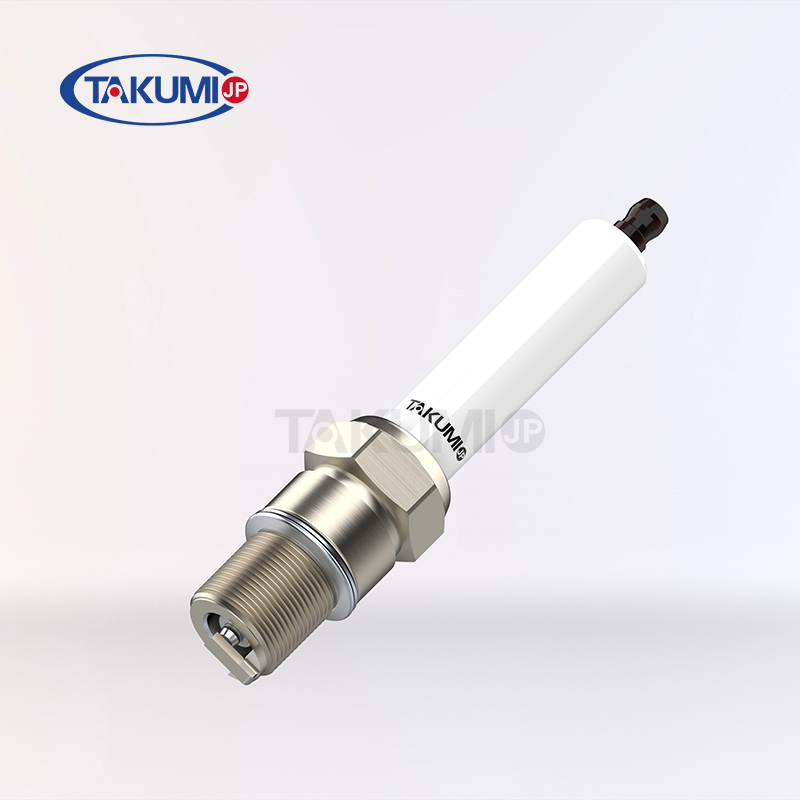
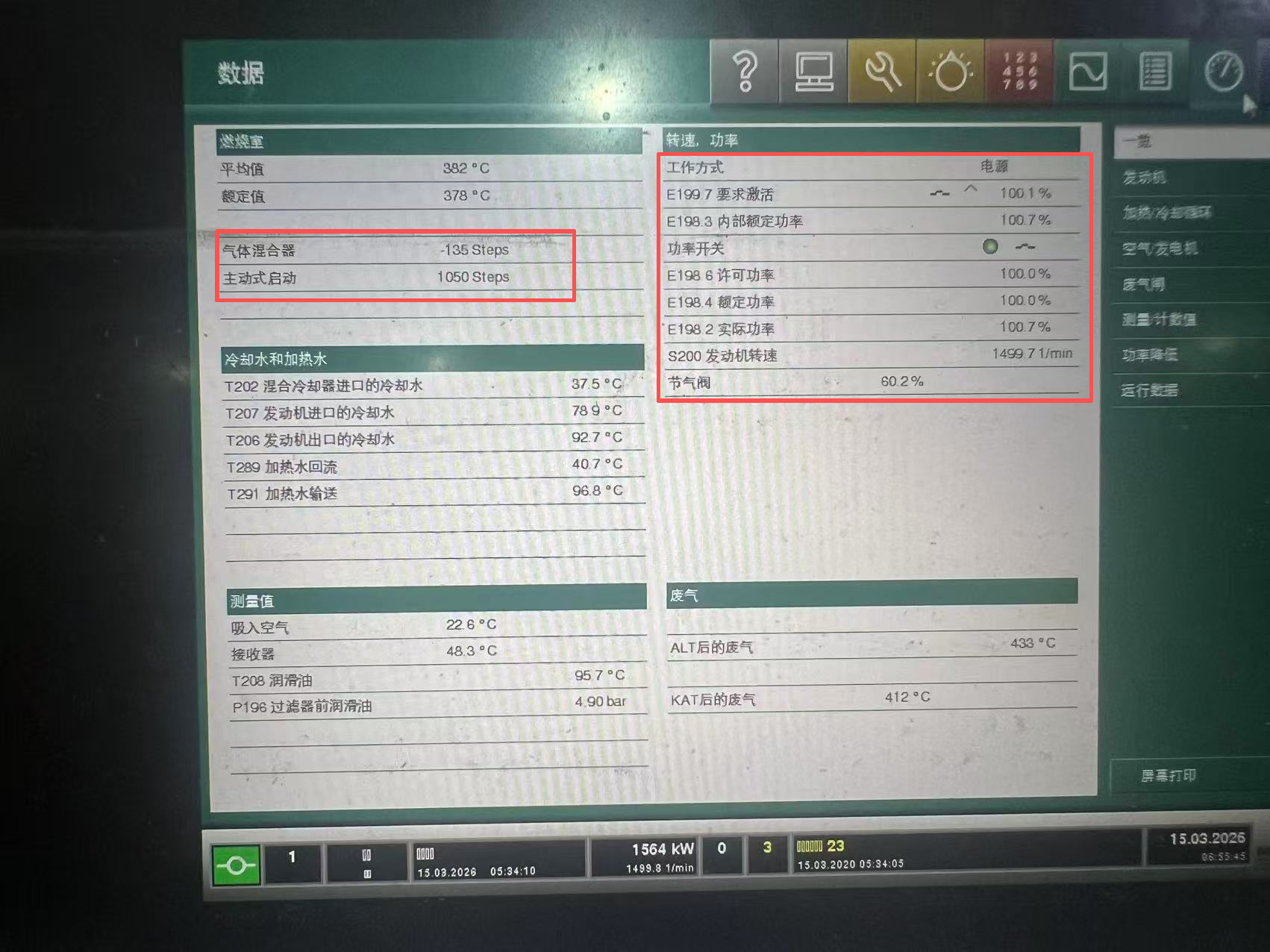
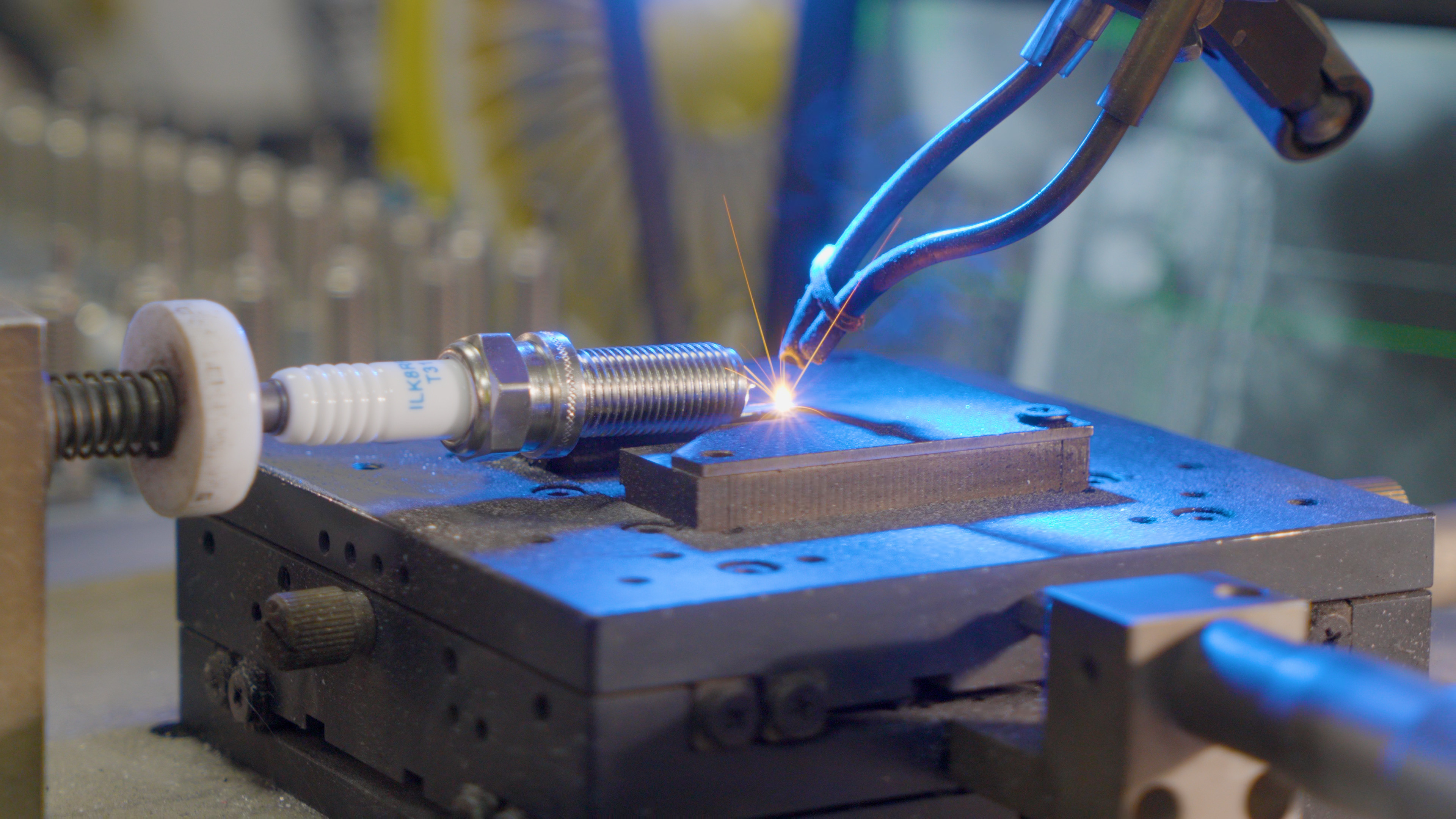
During gas engine operation, a product failure mode exists: abnormal precious metal particles appear at the spark plug electrode gap, causing the electrode gap to narrow, resulting in a decrease in ignition voltage. In extreme cases, the electrodes directly short-circuit to a voltage of 0. This is reflected in the gas engine control panel parameters as decreased cylinder temperature and ignition failure.
Testing revealed that the abnormal particle material is composed of the precious metal body material of the spark plug electrode.
During service, the spark plug electrode is subjected to a complex environment of high temperature, oxygen, electro-corrosion, sulfur corrosion, and water vapor. Hydrogen sulfide (H₂S) in the fuel gas reacts with the precious metal electrode under the combined effects of high temperature and electric arc, forming a thin reaction layer on the electrode surface at the nanometer to submicron scale. The main components are platinum sulfide (PtS) and iridium sulfide (IrSₓ), accompanied by small amounts of platinum oxide (PtO₂) and iridium oxide (IrO₂). The reaction layer is porous and brittle, exhibiting extremely poor adhesion to the electrode substrate, which is the fundamental reason for the detachment of precious metal particles from the electrode surface.
At the instant the precious metal reaction layer peels off the electrode surface, under the influence of high temperature and a strong reducing atmosphere (rich in CH₄, H₂, and CO) within the gas engine, the peeled reaction layer is directly reduced to the precious metal element. The core reduction reactions are as follows:
PtS + H₂ → Pt (elemental) + H₂S↑
IrSₓ + H₂ → Ir (elemental) + H₂S↑
PtO₂ + CO → Pt (elemental) + CO₂↑
IrO₂ + CO → Ir (elemental) + CO₂↑
The freshly reduced platinum/iridium element is in droplet form, in a liquid or semi-molten state. Driven by the vortex in the pre-combustion chamber, these droplets will re-adhere to the electrode surface (the wetting effect of the same metal at high temperature makes the droplets bond extremely firmly to the electrode). If the droplets happen to adhere to the electrode gap, it will directly cause the aforementioned ignition failure.
Sulfur plays a crucial role in accelerating electrode corrosion and particle flaking/remodeling. The extent of its impact is determined by the sulfur content during gas combustion, which the industry generally controls to below 20 ppm. Besides sulfur, other key factors inducing precious metal particle formation include high electrode temperature and gas engine knock.
High electrode temperature is often caused by an excessively low spark plug heat range, preventing timely heat dissipation from the spark plug electrode, a product compatibility issue. When analyzing this type of failure, spark plug heat range compatibility should be prioritized: if most users of the same unit do not experience this failure, spark plug design issues can be largely ruled out; if the failure is widespread in the same unit, design optimization is needed to reduce electrode temperature (optimization encompasses ceramic heat dissipation structure, electrode construction, etc.).
Spark plug and unit compatibility issues make the probability of failure highly correlated with unit load: if the unit operates at low load for extended periods, ignition failures caused by precious metal particles are generally unlikely.
In response to this type of failure, in addition to reducing the electrode temperature at its source through design optimization, increasing the electrode gap is a temporary measure that can be taken.
.gtr-container-x7y2z9 {
font-family: Verdana, Helvetica, "Times New Roman", Arial, sans-serif;
color: #333;
line-height: 1.6;
padding: 15px;
margin: 0 auto;
max-width: 960px;
box-sizing: border-box;
}
.gtr-container-x7y2z9 p {
margin-bottom: 1em;
font-size: 14px;
text-align: left !important;
}
.gtr-container-x7y2z9 .gtr-heading {
font-size: 18px;
font-weight: bold;
margin-top: 2em;
margin-bottom: 1em;
color: #0000FF;
text-align: left;
}
.gtr-container-x7y2z9 .gtr-sub-heading {
font-size: 16px;
font-weight: bold;
margin-top: 1.5em;
margin-bottom: 0.8em;
color: #0000FF;
text-align: left;
}
.gtr-container-x7y2z9 .gtr-image-block {
text-align: center;
margin-top: 1.5em;
margin-bottom: 1.5em;
}
.gtr-container-x7y2z9 .gtr-image-block img {
/* Original inline styles for width/height/max-width are preserved in HTML. */
/* No new layout or size styles are added here to the img element. */
/* The image will be centered by text-align: center on its parent .gtr-image-block */
}
.gtr-container-x7y2z9 .gtr-image-caption {
font-size: 14px;
text-align: center;
color: #555;
margin-top: 0.5em;
margin-bottom: 0;
}
.gtr-container-x7y2z9 ul {
list-style: none !important;
padding-left: 20px;
margin-bottom: 1em;
}
.gtr-container-x7y2z9 ul li {
position: relative;
padding-left: 20px;
margin-bottom: 0.5em;
font-size: 14px;
text-align: left !important;
list-style: none !important;
}
.gtr-container-x7y2z9 ul li::before {
content: "•" !important;
position: absolute !important;
left: 0 !important;
color: #0000FF;
font-size: 1.2em;
line-height: 1;
}
@media (min-width: 768px) {
.gtr-container-x7y2z9 {
padding: 25px 40px;
}
.gtr-container-x7y2z9 p {
margin-bottom: 1.2em;
}
.gtr-container-x7y2z9 .gtr-heading {
margin-top: 2.5em;
margin-bottom: 1.2em;
}
.gtr-container-x7y2z9 .gtr-sub-heading {
margin-top: 2em;
margin-bottom: 1em;
}
}
Spark Plug Gasket Analysis
The outer sealing gasket of the spark plug is the only movable component on the spark plug, and it is also the "bridge" which connecting the spark plug and the engine.
Take the common M18 gasket as an example: the different states of the gasket can reflect the different working environments; these can be used to infer the usage; these different states include: color, deformation, completeness, use marks, etc.
Color
Color: The initial color of the washer is galvanized
Initial state (front and back)
Color after normal use
After use, obvious signs of installation and use can be seen on the gasket. The outermost part (the rightmost gasket) does not touch the spark plug seat, so the coating is not damaged by friction. The black inner ring is the contact surface that fits tightly with the mounting seat.
The surface with four points facing upwards is the surface that fits with the engine cylinder head. You can see that the inner ring (including the four points) is black, while the outer ring is a coating color. This is because the outer ring fits tightly with the cylinder head mounting seat and is not exposed to the cylinder environment, while the inner black ring is exposed in the cylinder on the threaded side. The black attachment is carbon deposits.
The above picture shows a gasket that has changed color due to oxidation. The white block on the right picture is the residue of the coating that has not been completely ablated. The oxidation degree of the end faces on the two sides of the gasket is the same. This situation indicates that gas has leaked from this gasket during use. The high-temperature gas from the cylinder caused the gasket to change color.
Deformation
Deformation: the thickness of the gasket after installation
After the spark plug is installed at the specified torque, the gasket thickness should be within a certain range;
The installation torque value of the M18 washer is 50N.M, and the deformation range of the washer is about 1.45-1.65 mm (initial washer thickness 2.0 mm).
Initial thickness state
Normal status after installation
It can be observed that after deformation, the gap in the middle disappears due to being squeezed by the applied force.
Example: It is obvious from the above picture that the gap in the middle still exists (the thickness can be measured to verify); therefore, the root cause of the gas leakage in this case is that it is not installed properly;
Integrity
Integrity: Changes in the gasket appearance
Mainly refers to the integrity of the 4 "claws", especially when the gasket is not removed, observe the condition of the 4 "claws"
Whether the “claw" is broken;
Whether the "claw" is severely bent upward or downward;
If the above situation exists, it means that during the installation process, the "claw" was stuck on the thread, and under the torque installation, the "claw" deformed and forced the washer to "return to its position". In this case, after installation, the washer position and the concentricity of the spark plug body will be offset (check the installation traces at the same time). There is a certain probability that leakage will occur from the weak point.
Use marks
Use marks: After installation, the indentation and friction marks left by the spark plug and cylinder head torque.
The "step" marks on the installation surface can be clearly seen in the picture. This is a normal mark. From this step mark, it can also be judged whether the installation is too loose, whether there is any deviation during the installation and use, and the degree of eccentricity, etc. These play an auxiliary role in analyzing and determining the cause of the fault.
Japanese Craftsmanship · Global Success
—TAKUMI Spark Plug Brand Global Distributor Recruitment Program—
Brand Introduction
TAKUMI Brand, originating from Japan, specializes in spark plug R&D and manufacturing for more than 50 years, with core strengths in precision engineering, durability, and eco-friendly performance. Our products cover passenger cars, commercial vehicles, motorcycles, and high-performance tuning markets. Certified by ISO and compliant with IATF 16949, our spark plugs are exported to more than 20+ countries and serve as long-term partners for many famous brand.
Why Choose TAKUMI Spark Plugs?
✅ Cutting-Edge Technology: Iridium/Platinum electrodes enhance ignition efficiency by 30% and extend lifespan by 50%.
✅ Universal Compatibility: Supports 1,000+ models across European, American, and Asian vehicles.
✅ High Profit Potential: Flexible policies with territorial protection + tiered rebates for fast market penetration.
✅ Brand Empowerment: Localized marketing materials, technical training, and digital inventory management.
Distribution Requirements
Regional Demand: Existing automotive parts distribution channels or repair shop networks preferred.
Qualifications: Valid business license and familiarity with local auto parts markets.
Cooperation Models: Options for exclusive/non-exclusive distributors, with flexible initial order terms.
Support Policies
>Marketing Support: Co-branded promotions, trade show participation, and digital marketing.
>Technical Assistance: Free product training, installation guides, and 24/7 after-sales support.
>Logistics Assurance: Direct shipments from Japan/Southeast Asia warehouses for stable supply.
Join Us to Ignite the Global Market!
Contact Now:
Email: sales@takumijap.com
Website: www.takumijap.com
TAKUMI Brand Welcomes Worldwide Partners—Uniting Japanese Quality with Shared Success!